


Selling your Celtic coins?
Why sell to us?
Whether you’re a metdet who’s just found his first gold stater or someone with a 20-year-old collection to sell, there’s one thing you’ll both want to know: “Who’ll give me the best money for my Ancient British coins?”
These days, with so many people competing for your Celtic coins, you might wonder who is actually paying the highest prices. Not just auction prices, but cash prices too. Not just once in a blue moon, but year after year.
Whose ads can you believe? Whose advice can you rely on? Who can you truly trust? In the end, that’s something you’ve got to find out for yourself, from personal experience.
Record Ancient British Prices
GOLD STATER - £71,000
GOLD QUARTER - £10,200
SILVER UNIT - £13,200
SILVER 1/2 UNIT - £3,500
SILVER MINIM - £1,500
BRONZE UNIT - £2,250
POTIN UNIT - £1,450
Chris Rudd has set all these records.
No one else has come even close to them.
Chris Rudd not only gets the highest fixed prices for Ancient British coins, year after year. We also get the highest prices when we auction them, year after year – much higher than any other dealer or auctioneer. This isn’t just a matter of opinion. It’s a matter of fact.
For specific advice on how to achieve the maximum sales potential with the minimum risk for your Ancient British coins – be it one coin, a hoard or a whole collection – ask the Celtic specialist liz@celticcoins.com
Here are some clues...
Here are seven clues which may help you decide. If you’re still uncertain and would like to see more evidence, ask liz@celticcoins.com
Chris Rudd is the only dealer who deals only in Celtic coins. Since 1991 we’ve been building a global database of people who collect Celtic coins. This means that, unlike the generalist who sells all kinds of coins, ancient and modern and maybe medals too, we already have hundreds of hungry clients waiting to buy (or bid for) your Ancient British coins.
Big auction houses have big mailing lists and big catalogues and often get big prices for non-Celtic coins. But not one has Chris Rudd’s exclusive database of Celtic collectors. And not one gets such consistently high prices for Ancient British coins as we do.
Chris Rudd and only Chris Rudd offers you this unique set of selling options: instant cash for your Ancient British coins or an all-Celtic auction or a blend of both (say, cash for your lesser coins, auction for your finest and rarest). Nobody else can offer you this choice or be so flexible for you, because nobody else holds six all-Celtic auctions a year.
Every year Chris Rudd buys and sells more Ancient British coins than any other dealer or auctioneer. Because we’re trading daily in Celtic coins (and only Celtic) we know better than anyone what they’re worth and can estimate values more accurately. For a free valuation ask liz@celticcoins.com
Every other month Chris Rudd mails out a printed, fully illustrated catalogue of Ancient British coins offered for sale by auction. This means if you’re selling a large collection (or hoard) we can spread it over several auctions, if necessary, to avoid flooding the market.
Because Liz’s List Online is updated regularly we constantly need to replenish our stock. Nobody needs your Ancient British coins more urgently than we do.
Is he ‘faceless Fred’ on the internet? Is he the foxy trader who says he’s a collector? Is he the ‘honest John’ dealer who poses as a metdet and brags about his integrity? Is he the first man at a rally or coin fair who offers you cash, no questions asked? Are they the auctioneers who shout loudest in the coin magazines?
Consider this: For 25 years Chris Rudd has championed responsible metal detectorists, recorded their Ancient British coin finds (before the PAS did), trumpeted their triumphs worldwide and helped them fight for their Treasure awards.
Judging from their costly swanky ads and constant crowing in the media, you might imagine that it’s the large auction houses in London, New York, Munich and Zurich who get the highest prices for Ancient British coins. But you’d be wrong, very wrong. It’s a small firm in Norwich that sets the Celtic records.
Celtic hoard for sale?
Since 1991 Chris Rudd has probably handled more major Ancient British coin hoards, as a buyer or as a professional valuer, than any other leading British dealer. We can make you a cash offer for your hoard or we can sell it by auction for you. For expert advice consult liz@celticcoins.com Here are just a few coins from a handful of the many famous Celtic hoards featured in Chris Rudd’s catalogues.
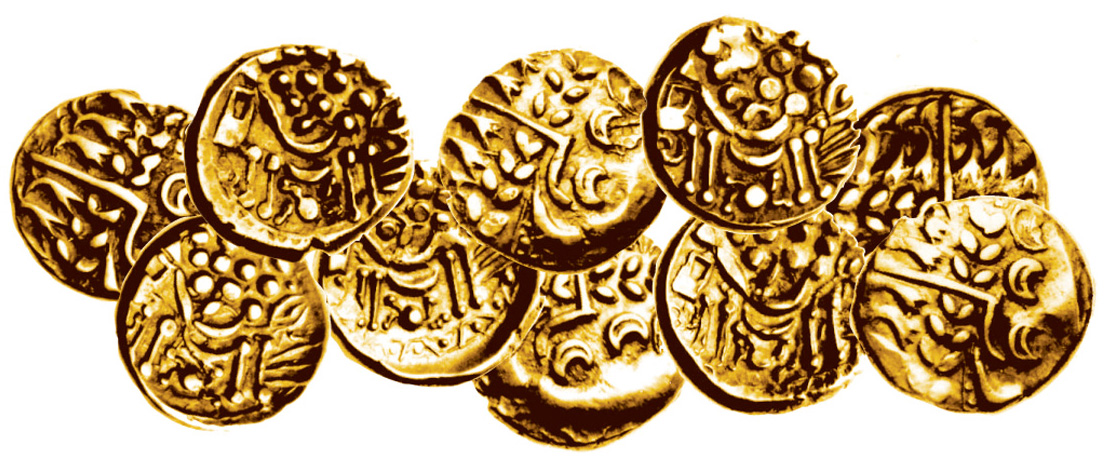
Puteaux 1950
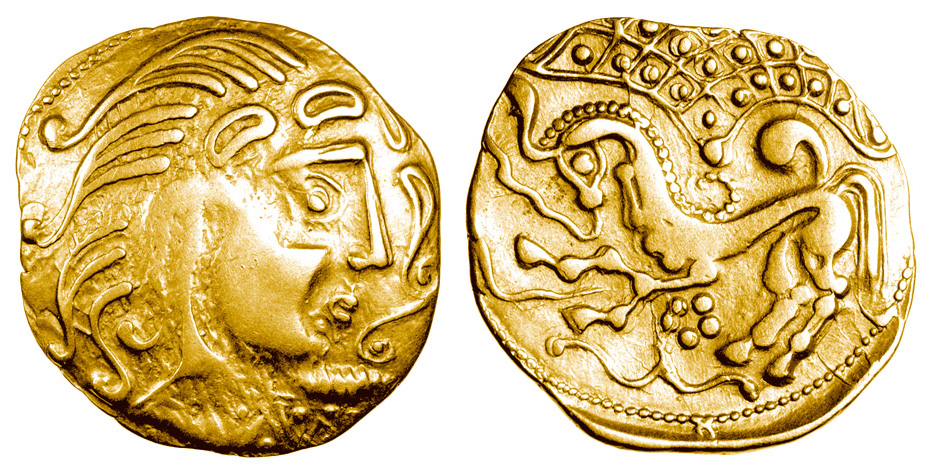
For further information ‘The Puteaux Hoard’ by Dr John Sills, Chris Rudd List 78, November 2004, p.2-4, author of Gaulish and early British gold coinage (2003), “the most important work on Celtic coinage for 30 years,” available from Chris Rudd. See Books about Celtic.
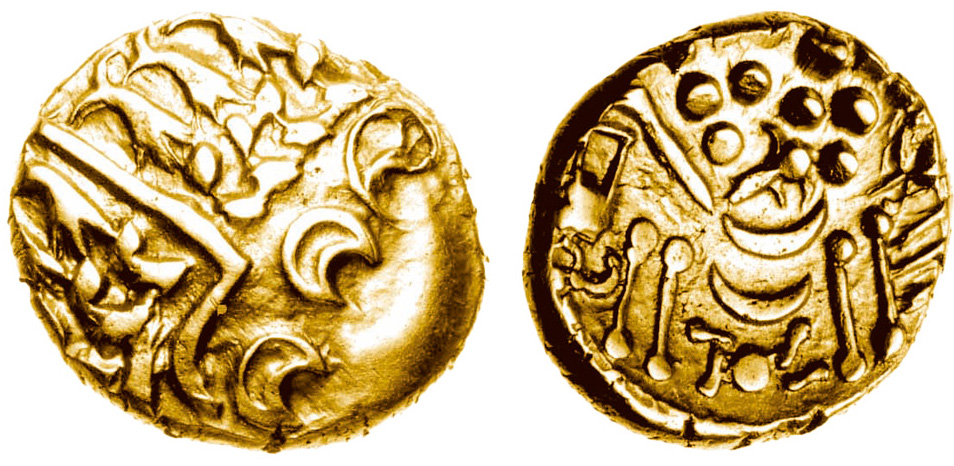
Chute 1994
Whaddon Chase 1849
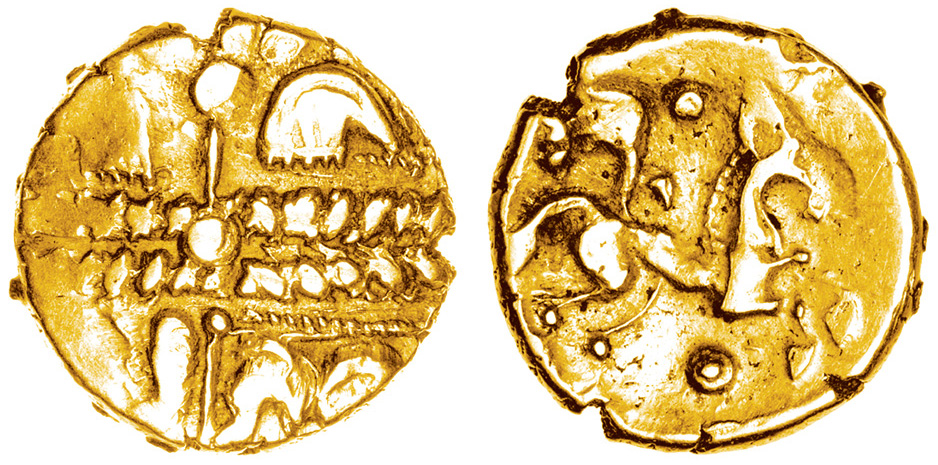
Cassivellaunos, leader of the British coalition against Caesar in 54 BC, may have ordered the minting of early Whaddon Chase gold staters (ABC 2433- 39), plus other gold staters from other tribes, to be paid as tribute to Rome from 53 to 51 BC, says Dr John Sills in his important paper ‘The earliest British coins: dating the undated’, Chris Rudd List 27, 1997, p.2-5.
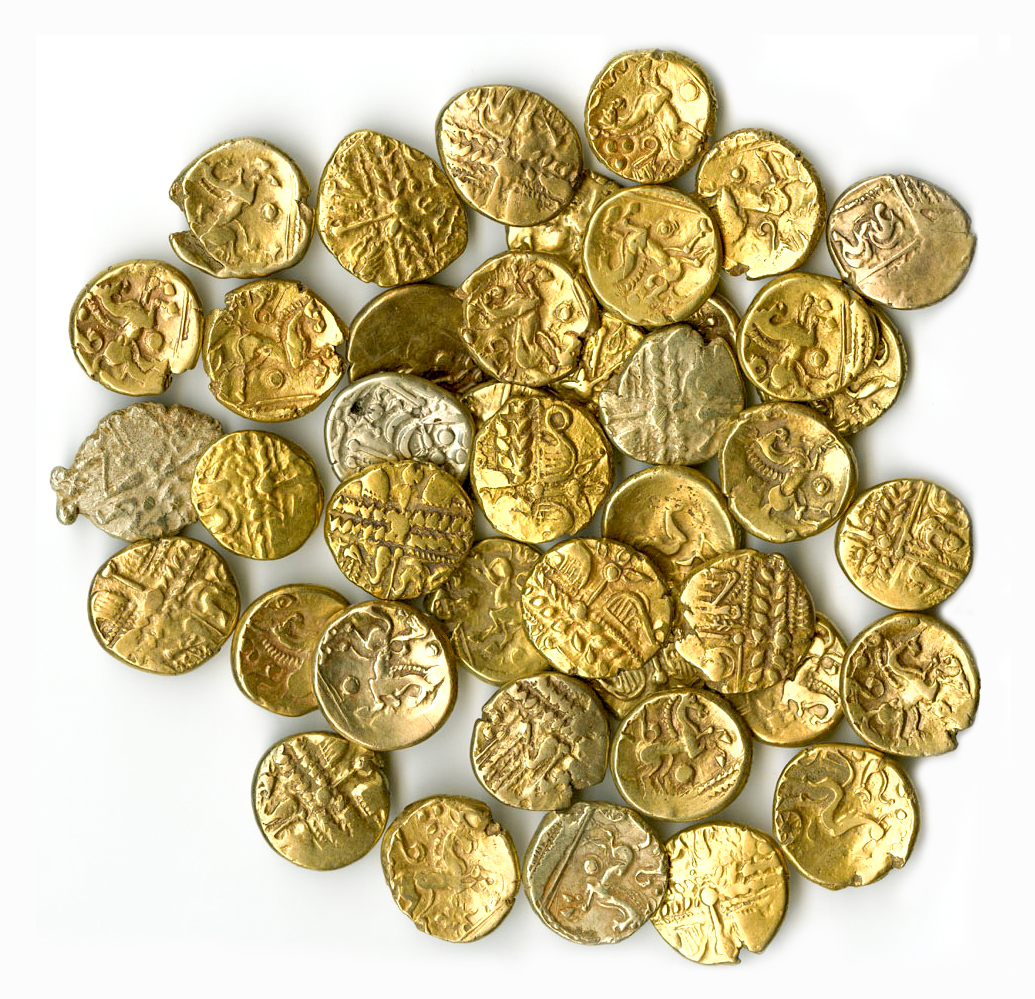
Brighstone 2005
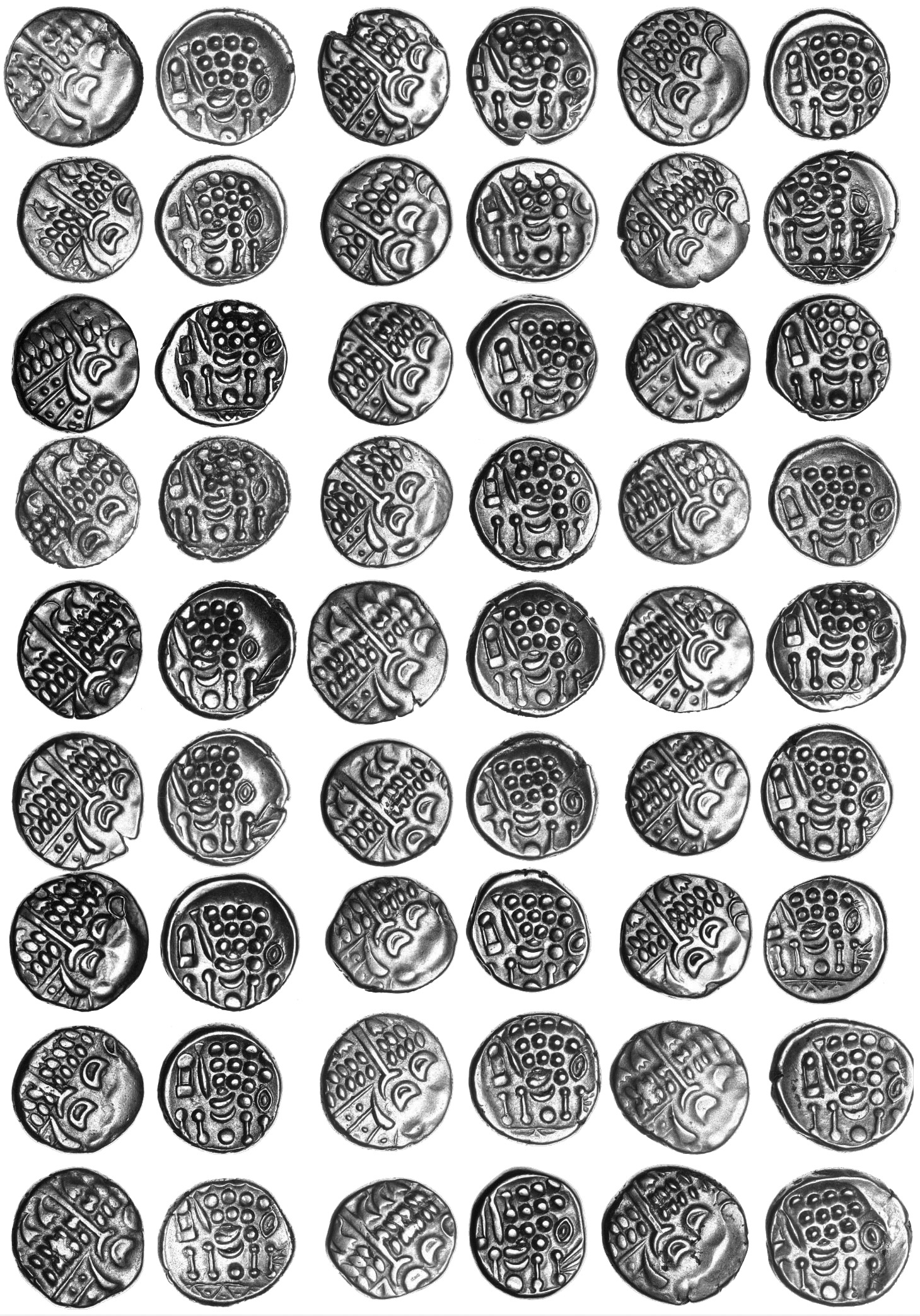
We knew the prime finder, got in early and acquired the lion’s share for our customers who showed their appreciation by quickly buying all we’d bought for them. Win-win all round – for finder, for dealer, for collectors. If you’d like a winning offer for your hoard, get lucky with liz@celticcoins.com
For Chris Rudd’s report on the Brighstone hoard and an earlier Isle of Wight hoard, see ‘Huge Iron Age hoard found on Isle of Wight.’
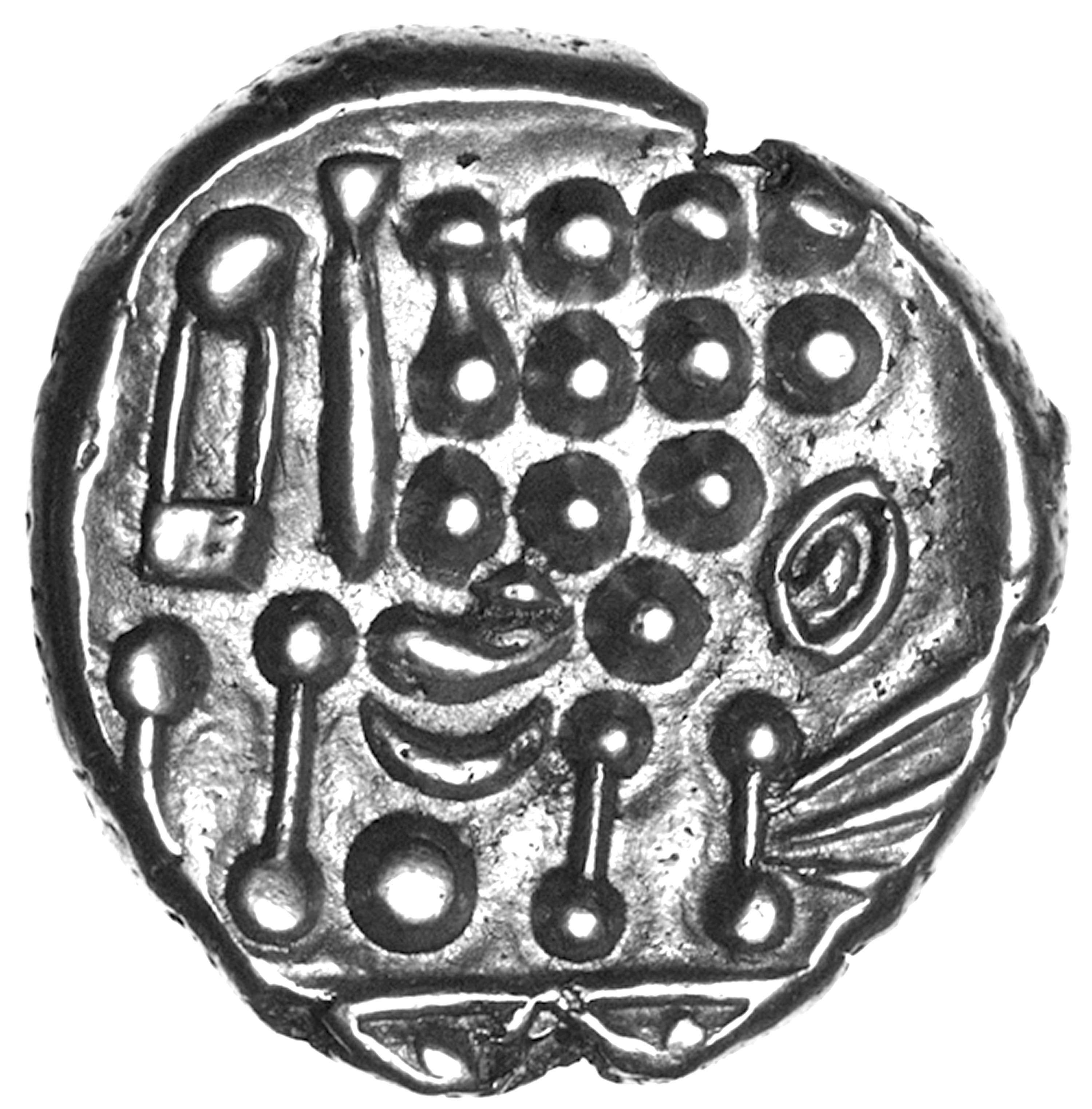
Holdenhurst 1905
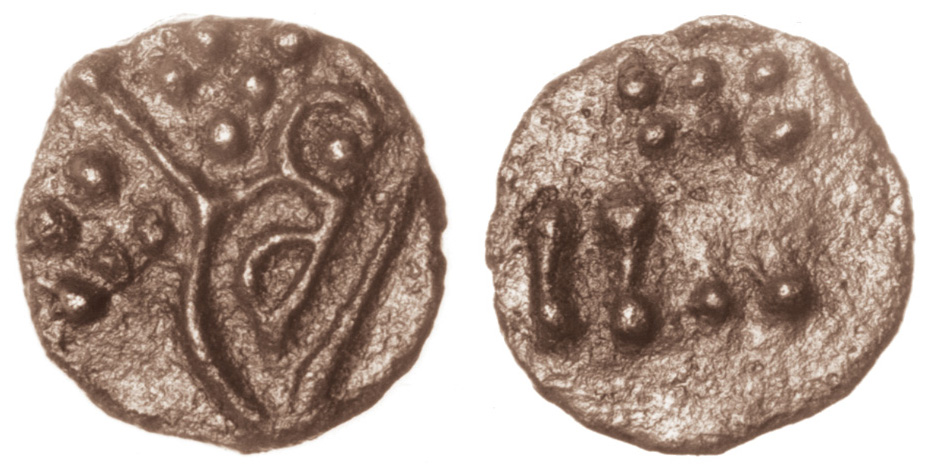
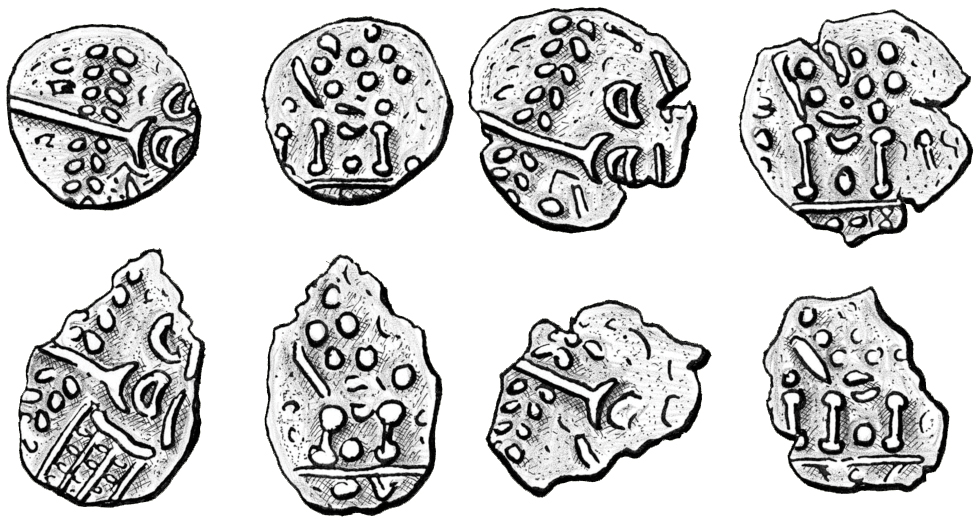
Richard Mack’s celebrated collection of Ancient British coins included six found by young amateur archaeologist Chris Rudd in the early 1950s, a few of which were later bought by Robert D.Van Arsdell, author of Celtic Coinage of Britain (Spink 1989), for example his ‘Struck Bronze Type’ VA 1290-1, p.302 and pl.34. On 3 August 1991 Chris drove Bob from near Danebury hillfort (where he was digging with Professor Barry Cunliffe) to Badbury Rings, Dorset, to show him where his coins had been excavated almost 40 years earlier. We’re still keen to help scholars whenever we can. For fast aid email liz@celticcoins.com
Westerham 1996
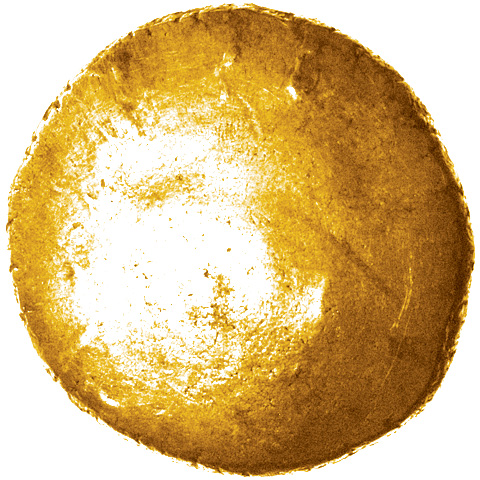
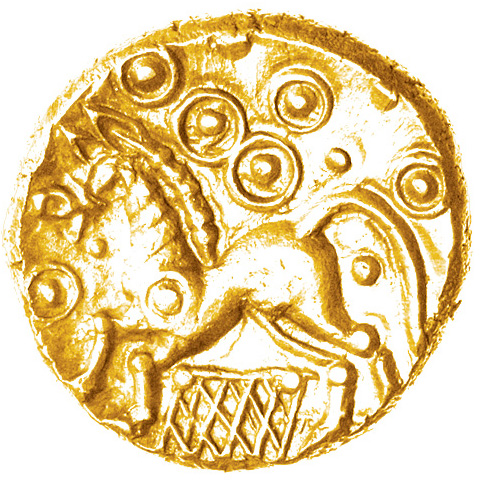
Late Weald Net gold stater, ABC 180, ex Westerham hoard, Kent, 1996-97. Chris Rudd List 120, November 2011, No.9. £7,200
There’s something fishy about it
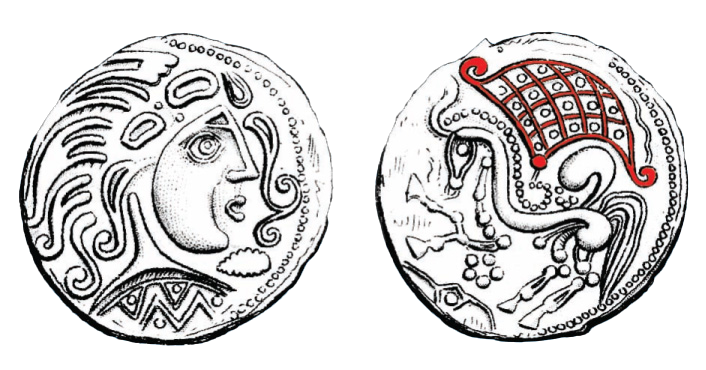
Sun on one side, sign of kingship on the other. But what’s that box? In 1996 I said it might be a Cantian fishing net, perhaps derived from lefilet triangulaire quadrille of Parisian gold staters (LT 7777-88). In the absence of other suggestions (or contradictions) I still like my net idea. Athenaeus, the Greek gourmet, says: ”Those [Celts] who live beside the rivers or near the Mediterranean or Atlantic eat fish in addition, baked fish, that is, with the addition of salt, vinegar and cumin“ (The Learned Banquet 4.36). What about the Brits in Kent? Surrounded by sea on three sides and living beside the well-stocked Darent, Medway and Stour, not to mention the Thames estuary and Wantsum channel, I’d be amazed if the Cantiaci weren’t fishermen and fisheaters. So what does the net signify? Later Kentish coins display seaserpents (ABC 213, 237, 243, 303, 312, 357), a capricorn (ABC 435), hippocamps (ABC 462, 465, 471), Neptune (ABC 474), a dolphin (ABC 477) and a war-galley (ABC 2939) – all images associated with the sea. So my guess is that the fishing net symbolises sea-power. The only other British coins that feature a possible net were the sea-girt Iceni (ABC 1474-80). I think they nicked it from Kent.
Westerham Treasure hoard 2003-06
These 17 Corded Triangle gold quarter staters, ABC 198 and variants, all came from the Westerham Treasure hoard, Kent, 2003-06, disclaimed by the British Museum (no, we don’t deal in dodgy material – only hoards which have been declared and properly recorded with the PAS).
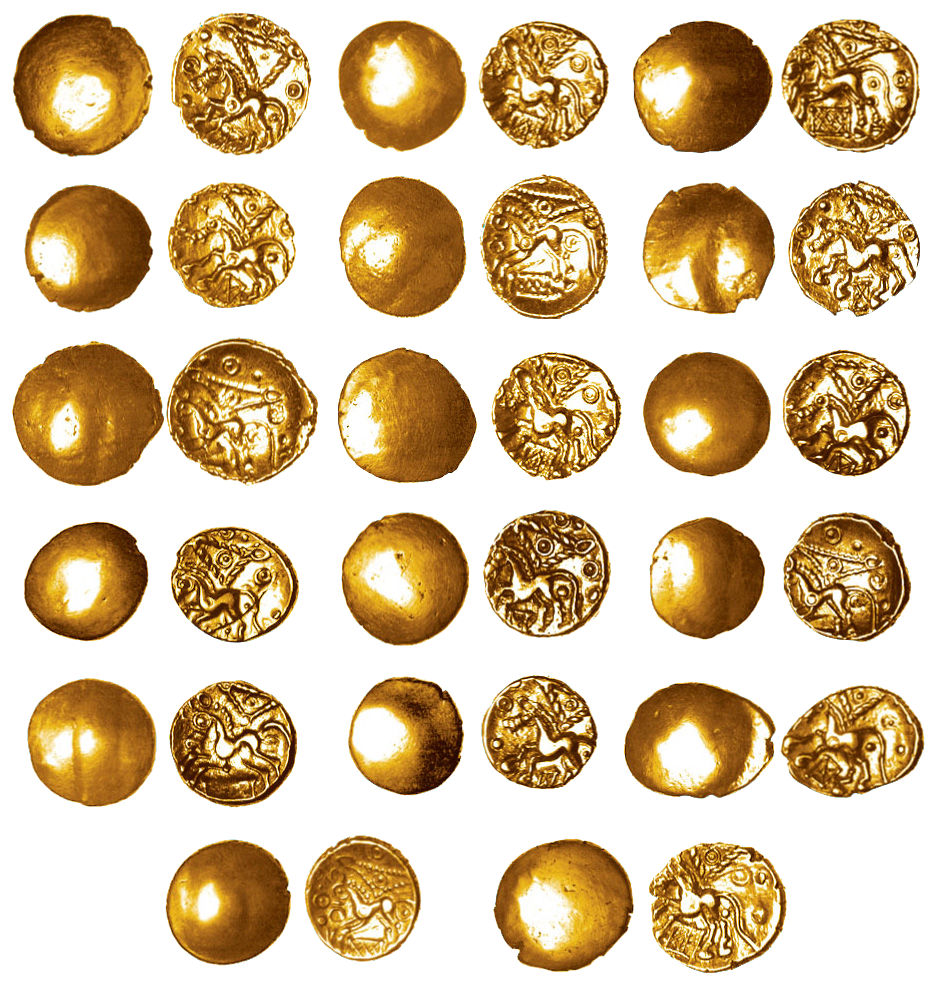
If you’re thinking of consigning your hoard to a general numismatic auction house that sells all kinds of coins – maybe medals and banknotes too – consider this: We bought these 17 gold coins at a well known, well publicised London auction and then sold them to Chris Rudd’s clients at a reasonable profit. What does that tell you about general coin sales? For specialist advice on how to sell your hoard (or collection) consult liz@celticcoins.com
Chris Rudd’s pedigree pieces
At Chris Rudd we’re happy to buy all kinds of Celtic coins – bronze, silver or gold: common or rare; VF or EF; orphan or pedigree. Here are a few of the many pedigree pieces we’ve had. We’d like to buy yours when you’re ready to sell. Or auction them for you, if you prefer. For expert advice ask liz@celticcoins.com
ex W.C. Boyd
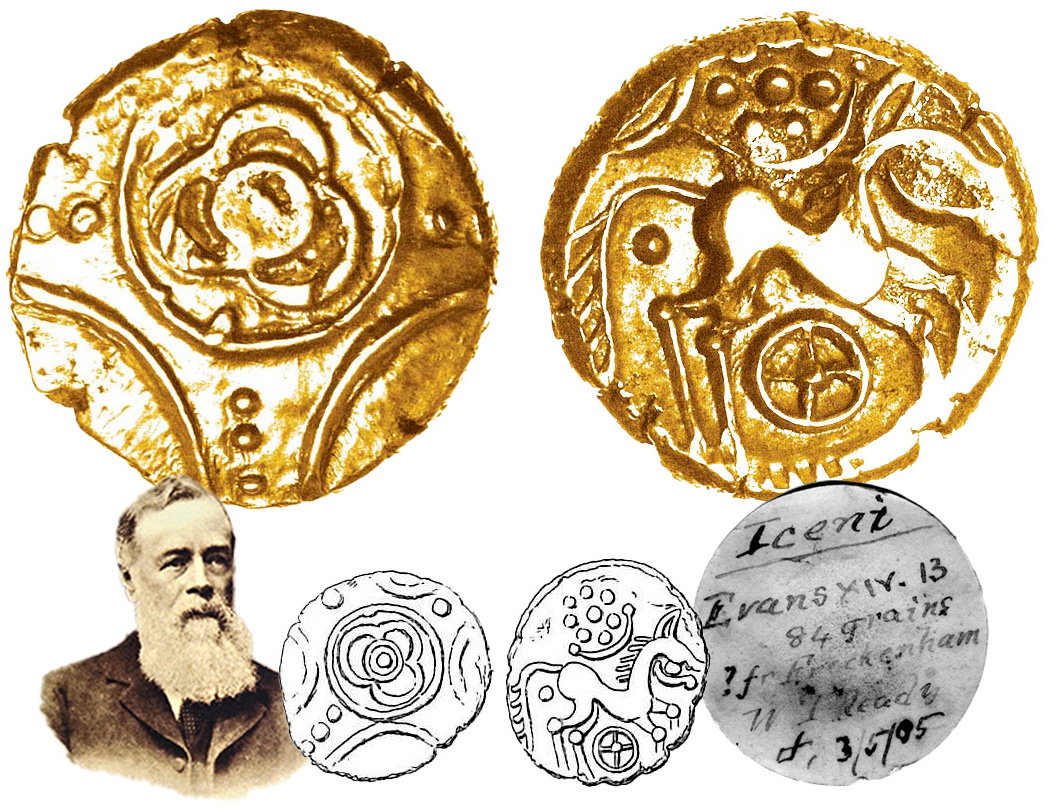
Freckenham Flower, Daisy Wheel Type, gold stater, ABC 1426, ex William Christopher Boyd (1840-1906), treasurer of the Royal Numismatic Society, who bought it from the London dealer, William Talbot Ready, 3 May 1905, ex Freckenham hoard, Suffolk, 1885. Chris Rudd List 126, November 2012, No.27. £2,400
ex C.W. Lister
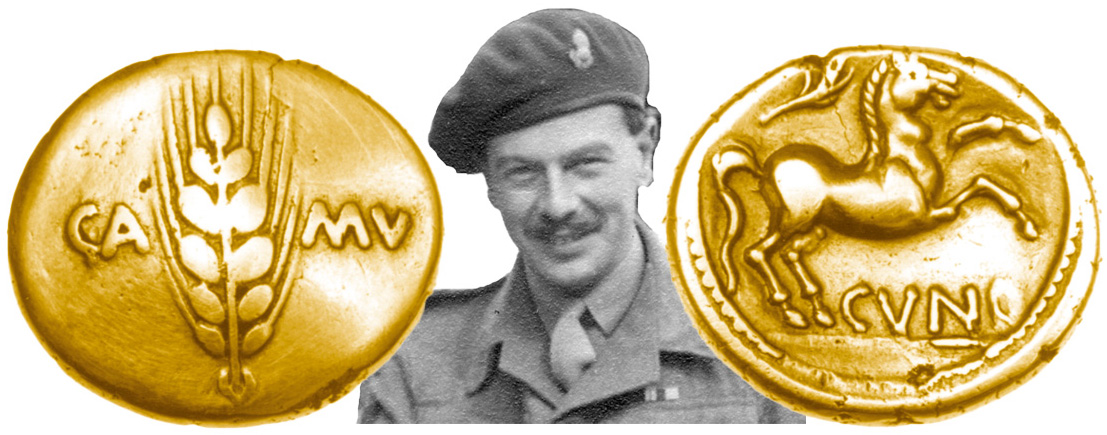
Cunobelinus Classic, Stalk Type, gold stater, ABC 2798, ex Major Clement Wynter Lister (1920-2010), ex G.C.Drabble, ex Major P.W.P.Carlyon-Britton. Published by Derek Allen, ‘Cunobelin’s Gold’, Britannia 6, 1975, pl.V, 128. Chris Rudd List 49, January 2000, No.47. £1,000
ex R. Van Arsdell
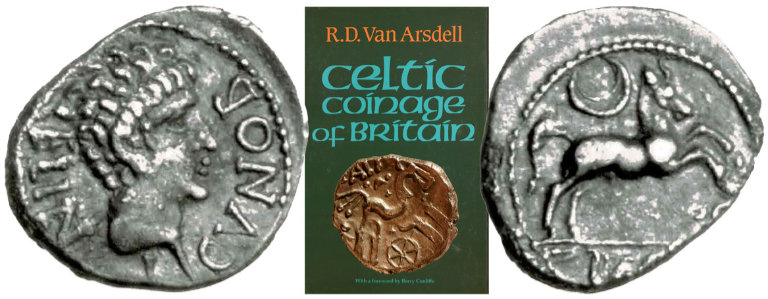
Cunobelinus Crescent Horse silver unit, ABC 2873, ex Robert D.Van Arsdell, author of Celtic Coinage of Britain (Spink 1989), The forgery of the “Haslemere hoard” (BNTA 1986), The Coinage of the Dobunni (OUCA 1994) and 57 important articles about Ancient British coins. Chris Rudd List 17, July 1995, No.27. £350
ex A. Breton
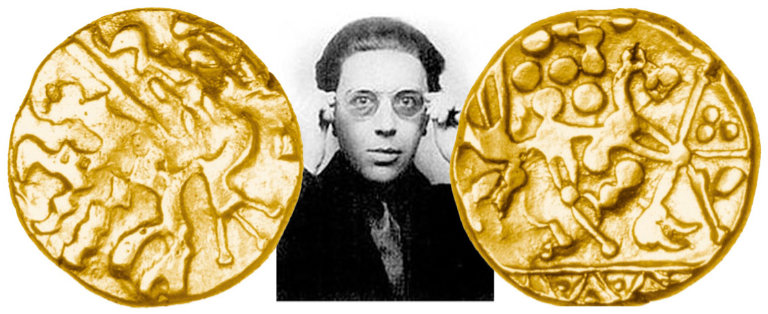
Yarmouth gold stater, ABC 518 (this coin), ex André Breton (1896-1966), French poet, essayist, art collector, pioneer of surrealism and friend of Pablo Picasso and Salvador Dali.
In his extraordinary book Le secret des Celtes (1969) Lancelot Lengyel illustrates this coin (p.148) and suggests that the windmill motif represents a dead bird with its head upside down. At Chris Rudd we’re always delighted when a dearly beloved old friend returns to us, as André Breton‘s Yarmouth gold stater did. Chris Rudd List 75, May 2004, No.28. £2,000 and Chris Rudd List 124, May 2012, No.17, £3,400
ex M. Rich
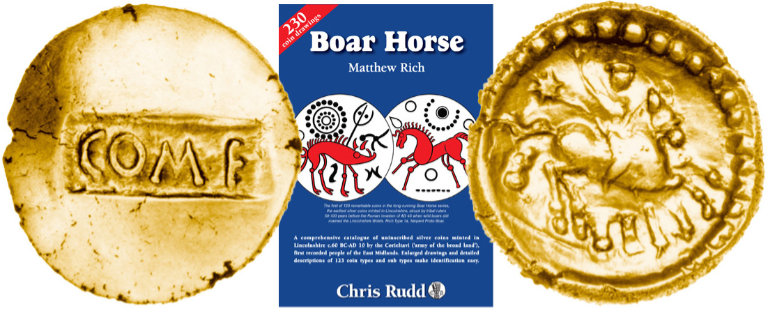
Tincomarus Warrior Com F gold stater, ABC 1067, ex Matthew Rich, author of Boar Horse (Chris Rudd 2014), a comprehensive catalogue of uninscribed silver coins minted in Lincolnshire c.60 BC-AD 10 by the Corieltavi. Chris Rudd List 72, November 2003, No.25. £1,500
ex R.C. Lockett
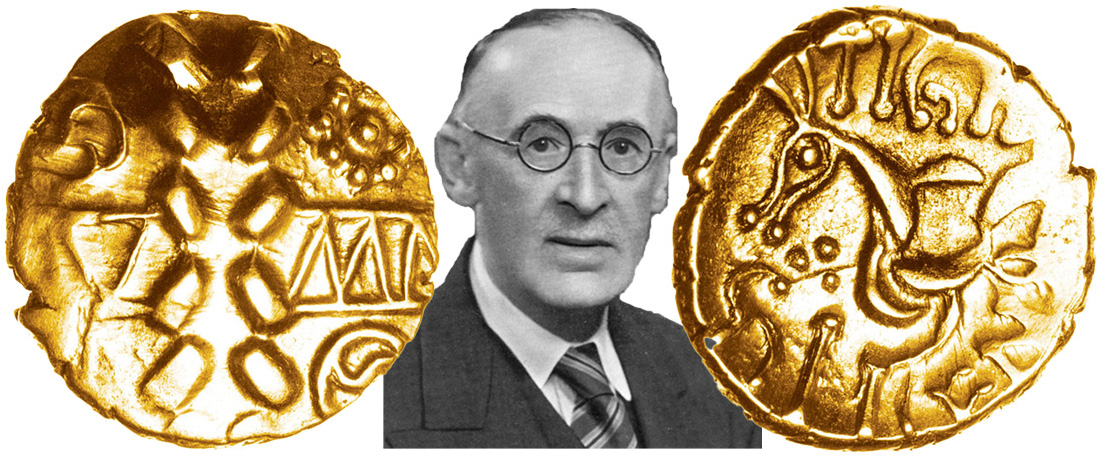
Dumnocoveros Tigirseno gold stater, ABC 1971, ex Richard Cyril Lockett (1873-1950), ex Alexander Mann, ex Thomas Bliss, ex H.Montagu, ex Hemingway (1882), probably ex Lightcliffe hoard, Yorkshire, c.1829. Published in Derek Allen, The Coins of the Coritani (SCBI 1963), pl.VIII, no.399. Chris Rudd List 131, September 2013, No.35. £3,500
ex R.P. Mack
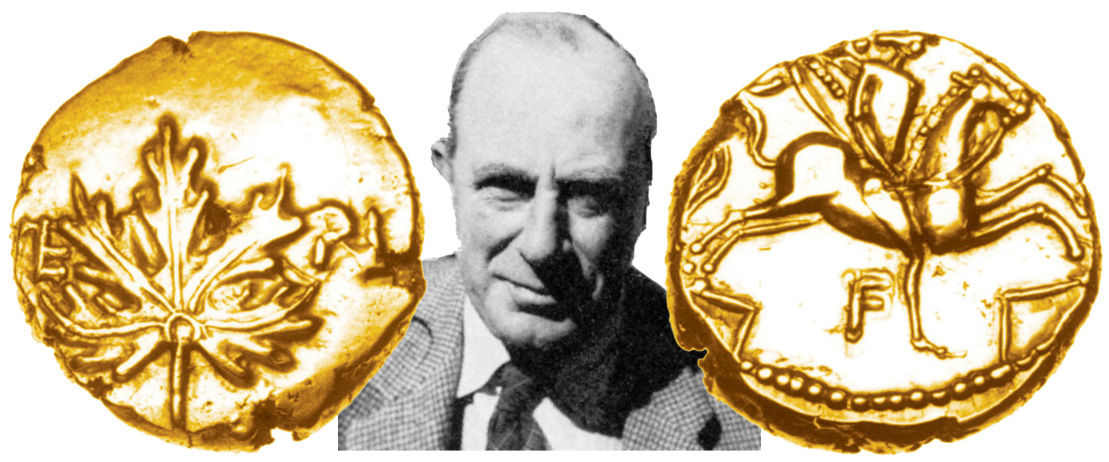
Verica Vine Leaf gold stater, ABC 1193, ex Commander Richard Paston Mack (1901-74), author of The Coinage of Ancient Britain (1953, 1964, 1975), ex Abbott, ex Thomas Bliss, ex J.W.Shaw, ex Alresford hoard, Hampshire, c.1880. Published in Sylloge of Coins of the British Isles 20 (1973), no.112, and by Derek Allen and Colin Haselgrove, ‘The Gold Coinage of Verica’, Britannia 10 (1979), no.38. Chris Rudd List 63, May 2002, No.28. £2,000
ex W. Borlase
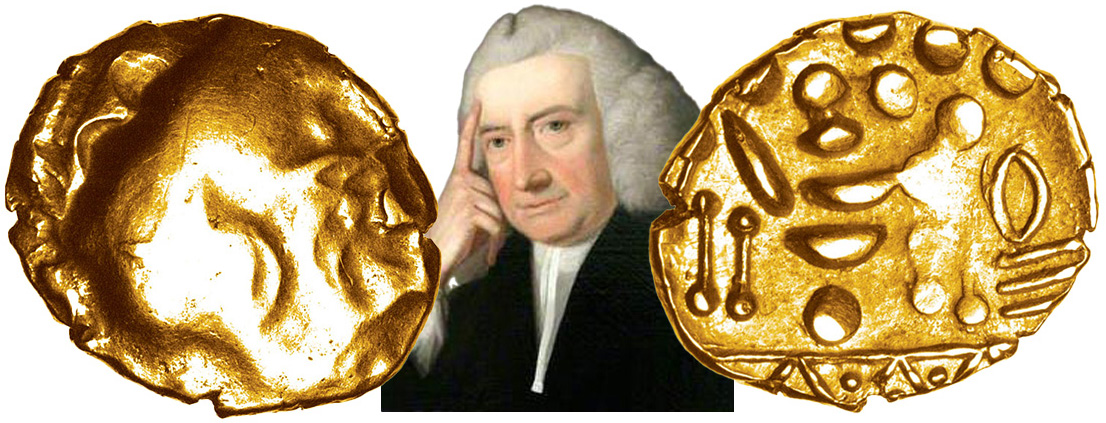
Westerham North gold stater, ABC 2430, ex Carn Brea hoard, 1749, recorded and illustrated by Rev.William Borlase (1695-1772) in The Antiquities of Cornwall, 1759 ed. Borlase, an early Celticist, believed that Cornwall, with its supposedly uncorrupted Celtic language and megalithic monuments, was well suited for providing evidence complementary to written history in investigating Britain’s inhabitants.
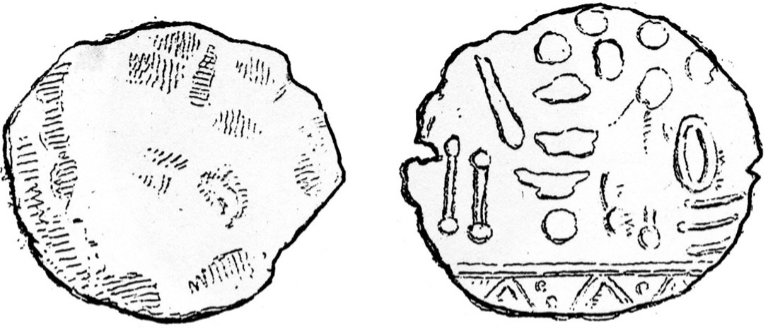
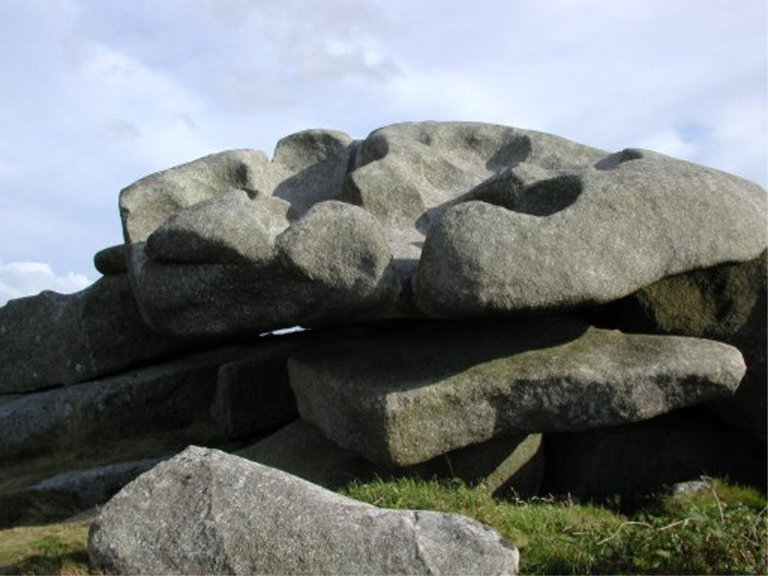
Five of the Carn Brea coins went to the Ashmolean Museum, Oxford. Other disappeared from public view, including the Westerham North gold stater shown above. Two centuries later, probably in the early 1970s, it turned up in the collection of war hero Henry Mossop, ‘The Flying Farmer’ and pioneer metdet, who was shot down over the Rhine on 21 June 1944, imprisoned for a year in Stalag Luft III and awarded the Distinguished Flying Cross for his bravery. This gold stater is now in the Royal Cornwall Museum. Chris Rudd List 113, September 2010, No.38. £1,500
ex E. Willett
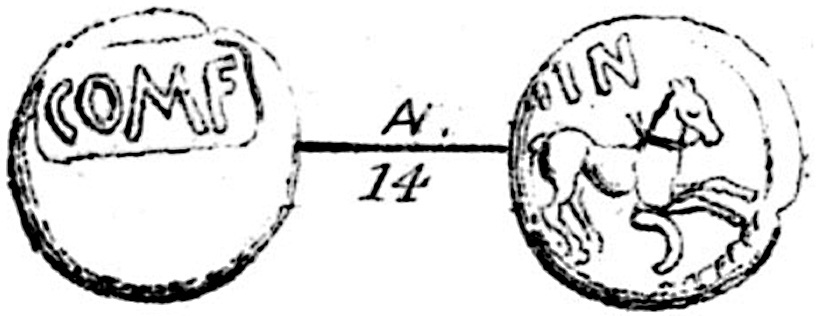
Tincomarus Tinc Horse gold quarter stater, ABC 1085, Numismatic Chronicle 17 (1897) pl.X, fig.3 (this coin), ex Rev.Norman Hart, ex Henry Mossop, from scattered hoard found on beach at Selsey, West Sussex, c.1873, and published by Ernest Willett FSA of Willett’s Nipple fame (see ABC 536) in ‘The Ancient British coins of Sussex’, Sussex Archaeological Collections 30 (1880), pl.IV, fig.14 (as above). Chris Rudd List 75, May 2004, No.19. £500
